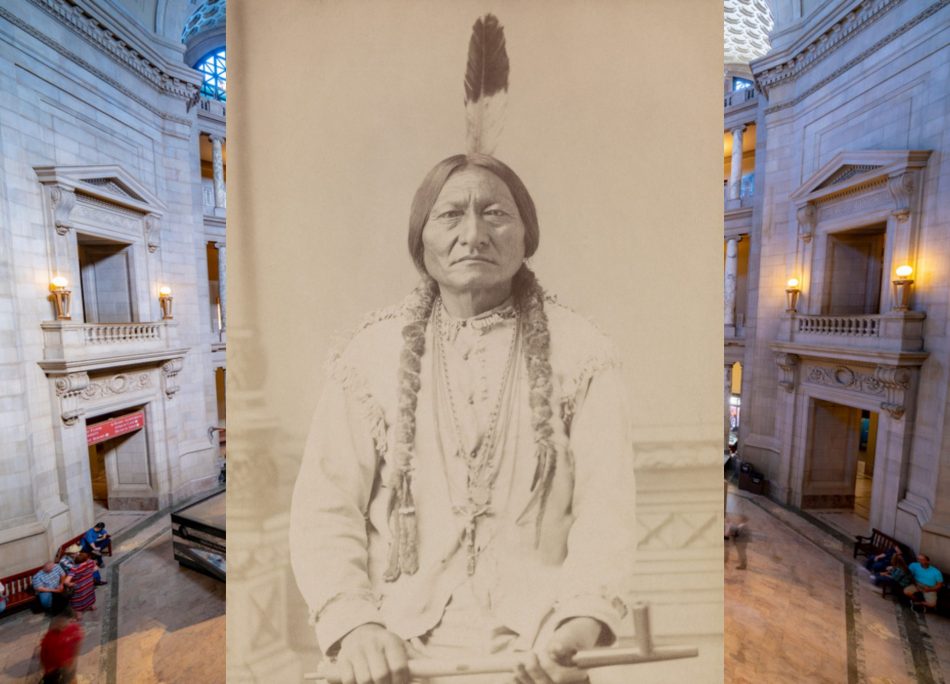
Researchers from the Lundbeck Foundation GeoGenetics Centre at the University of Cambridge are celebrating the successful extraction of usable DNA from a long-dead person after 14 years of effort. The method, developed by a team of scientists led by Eske Willerslev, was recently used to confirm the lineage between a South Dakota man and famed 19th century Native American Sitting Bull.
A sample of Sitting Bull’s hair has been stored at the Smithsonian Institution in Washington, where it was degraded from being kept at room temperature. After Cambridge scientists carefully used their new technique to isolate and identify autosomal DNA in the genetic fragments extracted from the hair, Smithsonian researchers used the findings to confirm that Ernie LaPointe is indeed the great-grandson of Sitting Bull, who died in 1890.
“With our new method, it is possible to establish deeper-time family relationships using tiny amounts of DNA,” said Willerslev.
LaPointe, who also has three sisters, suspected his familial relationship to Sitting Bull, whose Lakota name was Tatanka-Iyotanka, but had no way of confirming the lineage until now. After reading a magazine article about the Cambridge efforts to extract DNA from the hair sample, LaPointe reached out to Smithsonian to use the findings to confirm his family history.
This is the first time that DNA from a long-dead person has been used to link a living individual and a historical figure. It offers the potential to replicate the process with other historical figures from old samples of hair, teeth, or bones.