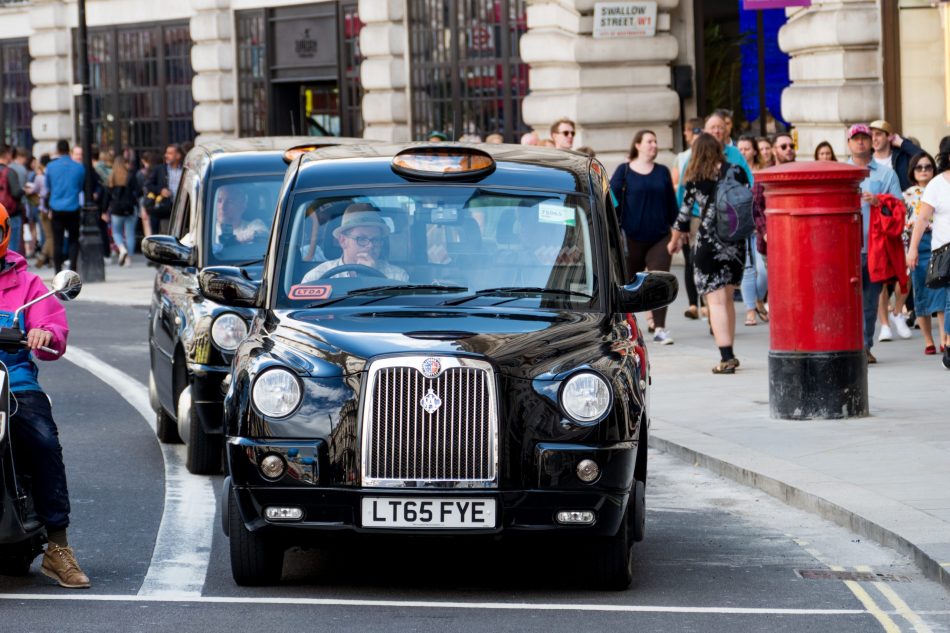
What do squirrels and London’s licensed black cabbies have in common? An extraordinarily large hippocampus—the area of the brain that deals with spatial navigation.
London’s licensed black cabbies don’t need the modern convenience of GPS devices. Instead, they rely on “the knowledge,” which they earn through years of experience and training to memorize the labyrinthine street network of the city’s 58,000 streets. Now, researchers from the University College London’s (UCL’s) Spatial Cognition Group are tapping into the grey matter of the brains of up to 30 taxi drivers for their new Taxi Brains project.
The project is backed by Alzheimer’s Research UK and builds upon studies that were conducted by UCL neuroscientist Professor Eleanor Maguire, who was the one who discovered that London cabbies share the remarkable characteristic of large hippocampi with squirrels and some birds over 20 years ago.
“Their hippocampus appears to get bigger the more years [the cabbies] put into the job,” says research lead, Professor Hugo Spiers, from UCL’s department of experimental psychology. “That’s really interesting for dementia research because it’s precisely the part of the brain that declines in size with Alzheimer’s disease,” he adds.
Prof. Spiers believes that there may be something proactive about practicing your spatial knowledge every day as London cabbies do. “It may not necessarily be spatial, but just using your brain rather than Google Maps might actually help—in the same way, that physical fitness is important.”
Prof. Spiers told Positive News that the Taxi Brains project is “a chance to revisit an old finding,” but with improved MRI technology that will be able to accurately depict changes in individual areas of drivers’ hippocampi. The study involves testing each cabbies’ navigational skills over two hours while they have MRI scans done.
The project still needs London cab drivers for this month, so if this applies to you and you want to offer your support, visit @taxibrains on Twitter.
This story is part of our ‘Best of 2021’ series highlighting our top solutions from the year. Today we’re featuring health solutions.