Scientists at MIT are in the process of developing a new source of passive lighting that could one day light up our streets. The surprising source? Glow-in-the-dark plants.
The relatively new field of “plant nanobionics” involves embedding nanoparticles into plants to enhance the natural abilities they already have or give them new ones. We’ve already seen some impressive results from the MIT team such as the plants that send electrical signals when they need water, spinach that can detect explosives, and watercress that glows in the dark.
The glowing watercress didn’t give off much light—in fact, its glow was comparable to those flat glowing stars that many of us stuck to our bedroom ceilings as children. However, the researchers have since found a way to boost the brightness to more practical levels by switching the glowing components from luciferase and luciferin (the same components that give fireflies their glow) to phosphor materials that absorb and store visible light and ultraviolet light, then release it as phosphorescence.
“Creating ambient light with the renewable chemical energy of living plants is a bold idea,” says Sheila Kennedy, one of the authors of the study. “It represents a fundamental shift in how we think about living plants and electrical energy for lighting.”
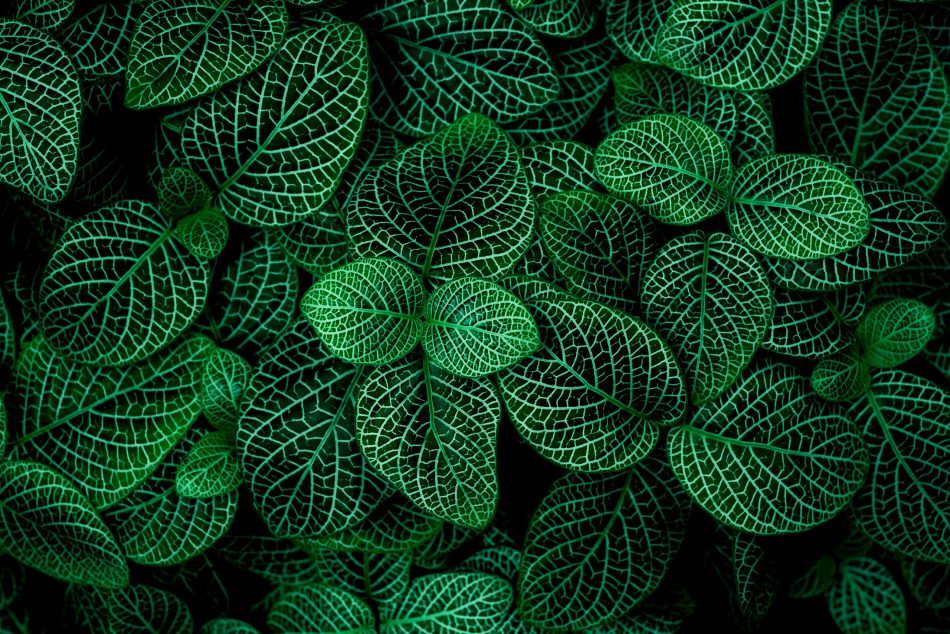
The result of their work creates plants that glow green after being exposed to light from the sun or LEDs. The team performed their technique on a variety of plants, including watercress, tobacco, basil, daisies, and elephant ear. They found that just 10 seconds of exposure to blue LEDs make the plants glow 10 times brighter than the previous version and would give light for up to an hour.
Remarkably, the nanoparticle implants had no adverse effects on the plants’ normal functions, like photosynthesis and water evaporation through their leaves.
The researchers hope that they can continue developing the glowing plants so that they could one day be used to passively light up public areas, effectively reducing our energy consumption.
According to Kennedy, “If living plants could be the starting point of advanced technology, plants might replace our current unsustainable urban electrical lighting grid for the mutual benefit of all plant-dependent species—including people.”
Source study: Science Advances—Augmenting the living plant mesophyll into a photonic capacitor.