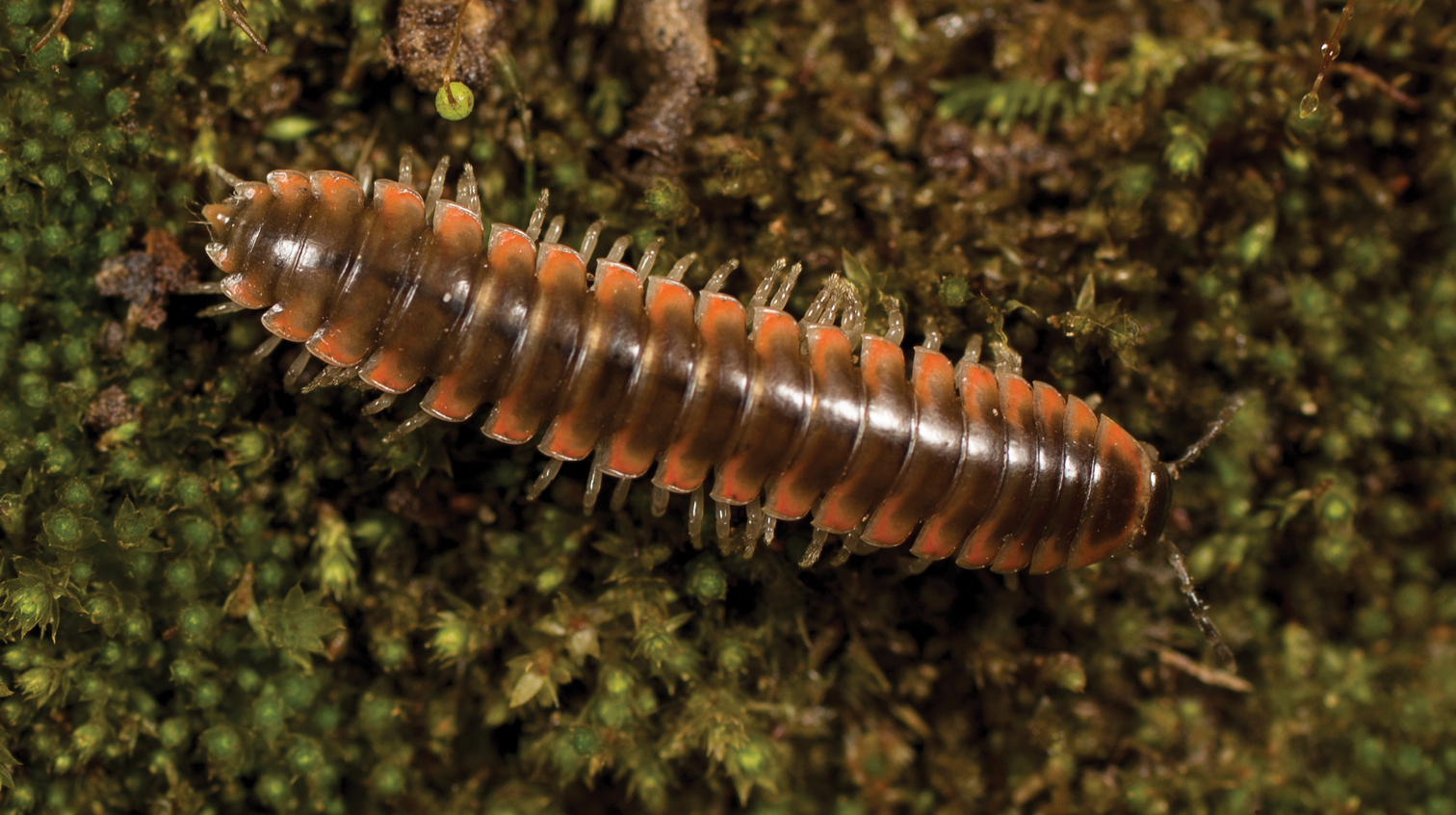
There have been several newly discovered animals in the past year named after famous individuals. This includes Opaluma rupaul, a species of a fly named after the drag queen Ru Paul and the rain frog Pristimantis gretathunbergae, named after climate activist Greta Thunberg.
Recently, 16 new species of millipede have been discovered in the Appalachian Mountains in the United States. These minibeasts are famous for their many legs and are extremely valuable decomposers, helping recycle nutrients back into forest floors.
Enter Nannaria swiftae
With 16 new species, there’s a lot of naming to do. Some were named after the Virginia Tech researcher’s loved ones and some after people they admire. The twisted-claw millipede Nannaria swiftae was named after one of the lead scientist’s favorite singers, Taylor Swift.
“Her music helped me get through the highs and lows of graduate school, so naming a new millipede species after her is my way of saying thanks,” explains Derek Hennen, who named the infamous insect.
This newly identified species ranges from 18 to 38 millimeters long, with white legs, shiny caramel-brown to black bodies, and white, red, or orange spots. Twisted-claw millipedes get their name from the appearance of their males, harboring flattened, small, and twisted claws.
How did they find this new species?
Previous scientific studies and museums have thrown all twisted-claw millipedes into the same category, although researchers have long suspected many of these may be their own species.
The search for these millipedes has been a multi-year feat, with the team traveling across 17 U.S. states to check under leaf litter, logs, and rocks for these little creatures. On this trip, researchers collected DNA and scientifically described over 1,800 specimens.
Understanding the natural world as deeply as possible is extremely important for humans to have the best chance of preserving it. Conservationists will now be able to factor these little insects into work saving woodland habitats across the U.S. and have better knowledge of the biodiversity of this ecosystem.
Source study: ZooKeys – A revision of the wilsoni species group in the millipede genus Nannaria Chamberlin, 1918 (Diplopoda, Polydesmida, Xystodesmidae)